Ending a marriage is rarely a simple legal choice. Some spouses want space without ending the relationship completely, while others need a definitive legal path forward. Under Ohio law, both legal separation and divorce allow the court to address important matters like child custody, property division, and support.
In this article, our experienced Columbus divorce lawyer will cover the differences between legal separation and divorce in Ohio and how to make decisions that align with your goals, responsibilities, and long-term plans.
What Is Legal Separation in Ohio?
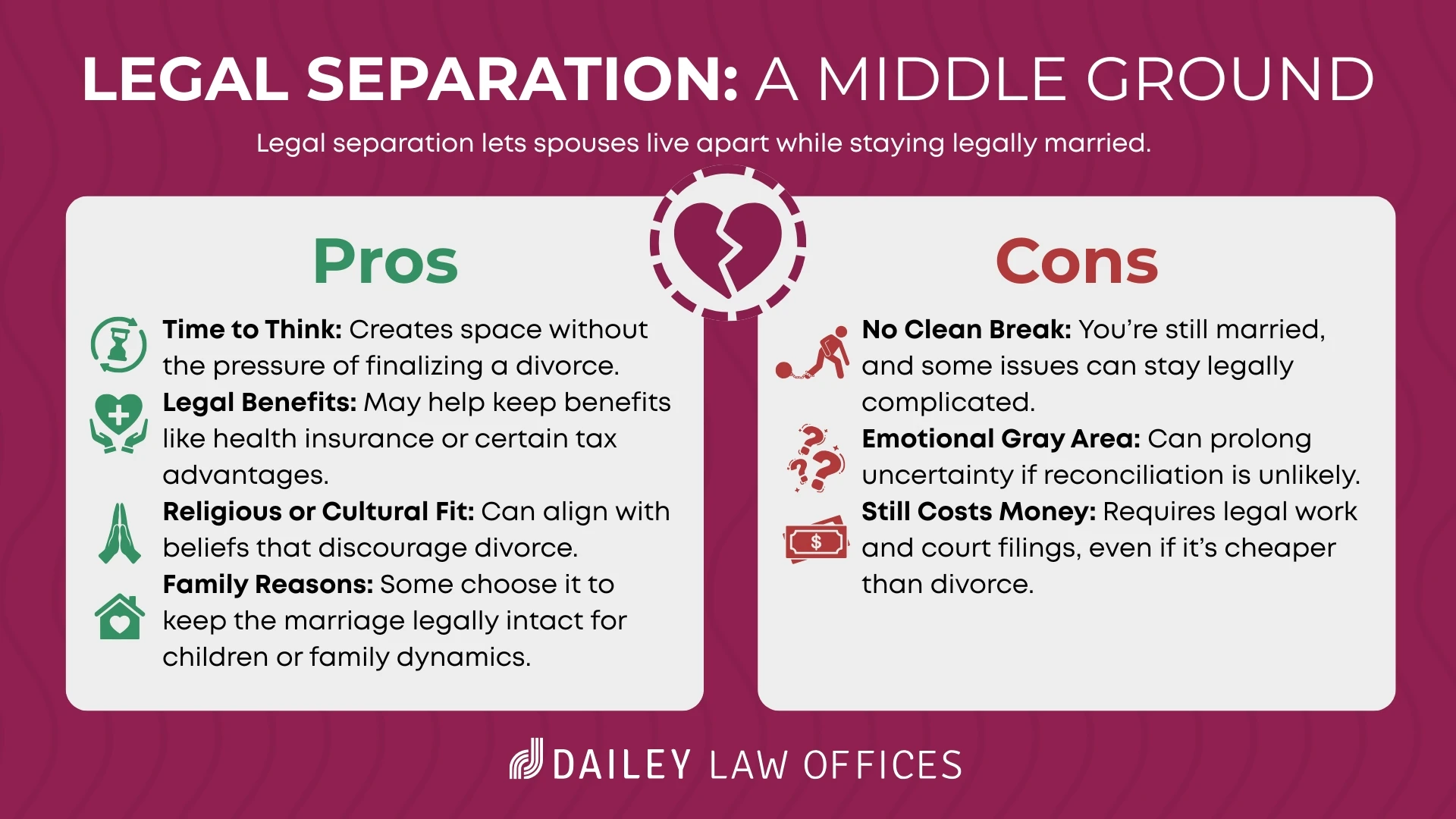
Legal separation is a court-ordered process that allows spouses to live separately while remaining legally married. Under Ohio Revised Code Section 3105.17, either spouse may file a complaint for legal separation, and the court may grant legal separation even if the parties are not already living apart.
The court can still issue binding orders covering parenting, finances, and property. In many ways, the legal process looks similar to divorce, but the marriage itself does not end.
When a couple pursues legal separation in Ohio, the court may decide issues such as:
- Child custody and parental rights
- Child support and spousal support
- Property division and allocation of debts
- Temporary orders governing daily responsibilities
Even after the court grants a legal separation, the spouses remain married in the eyes of the law. They cannot remarry different partners unless they later complete the divorce process.
Some couples choose this path because of religious beliefs, financial considerations, or uncertainty about the future. Legal separation creates structure and protection without requiring a final termination of the marriage.
What Happens in a Divorce in Ohio?
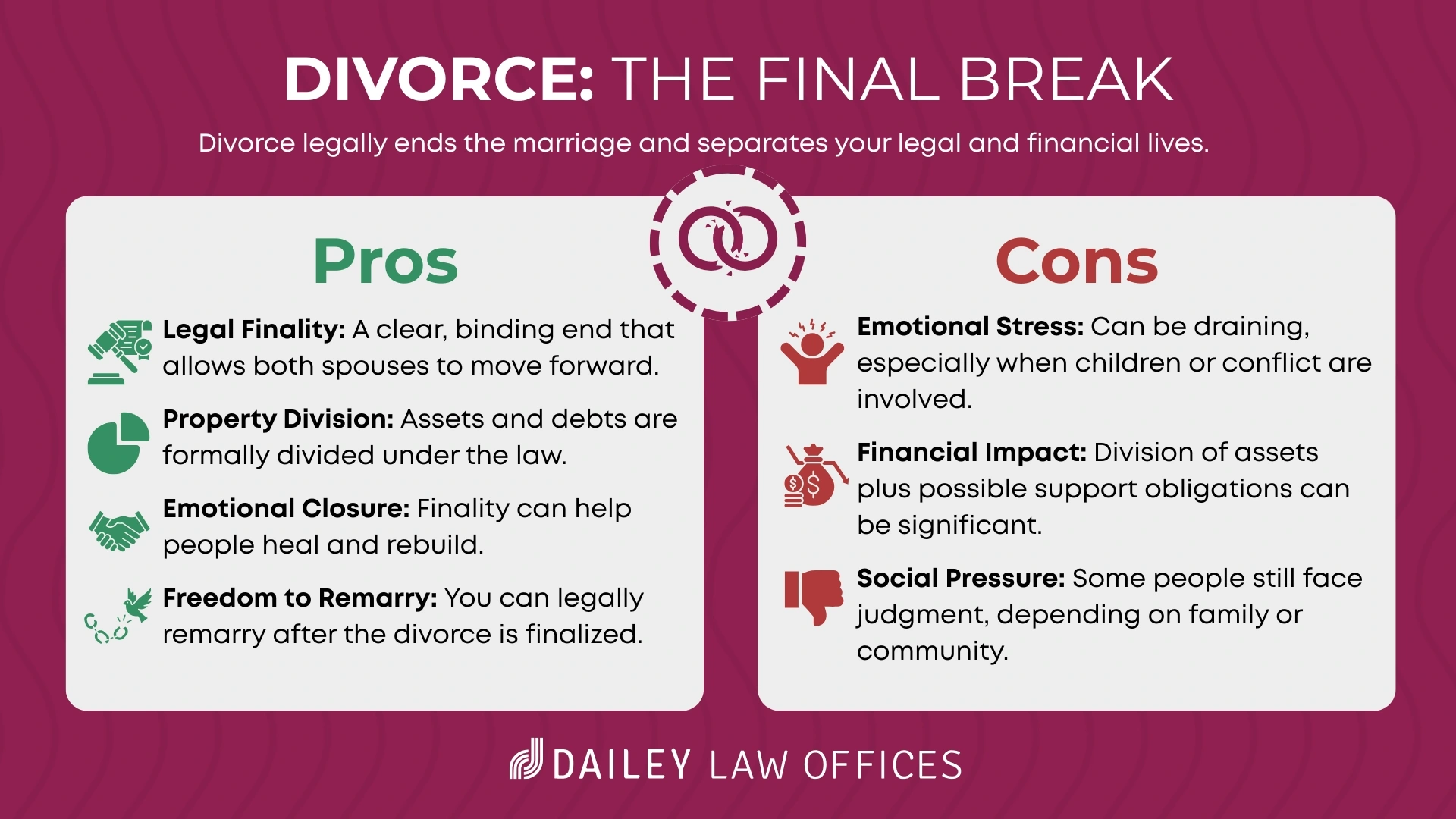
A divorce ends the marriage through a final court order. Once the court issues a decree, the legal relationship between spouses is terminated, and each person is free to move forward independently.
The divorce process also addresses the same issues handled during legal separation, including support, custody, and property division. The difference is that the marriage ends, and both parties become legally single again.
Ohio Revised Code Section 3105.01 recognizes both fault-based and no-fault grounds for divorce. Common no-fault grounds include incompatibility or living separately for at least a year, while fault-based grounds may involve extreme cruelty, gross neglect of duty, or willful absence. These grounds help the court determine whether to grant the divorce under Ohio law or not.
Key Differences Between Legal Separation and Divorce
Although legal separation and divorce address many of the same legal issues, their outcomes and long-term effects are distinct.
Legal Separation
- The couple remains legally married.
- The court can issue enforceable legal agreements.
- Spouses live separately, but the marriage continues.
- A future divorce may still be filed later.
Divorce
- The marriage ends permanently.
- The court issues a final decision dividing property and responsibilities.
- Each spouse is free to remarry.
The choice often depends on whether the parties want to preserve the legal status of the marriage or fully move on. Choosing dissolution over traditional divorce can make the process even faster and less expensive.
Child Custody, Child Support, and Parenting Responsibilities
Whether spouses pursue legal separation or divorce, the court’s priority remains the best interests of the children. Judges review parenting arrangements carefully to ensure stability and fairness.
Orders may include:
- Allocation of parental rights and responsibilities
- Parenting time schedules
- Child support calculations
- Healthcare and education decisions
Legal separation does not reduce parental responsibilities. Both spouses remain subject to court orders and must follow the same rules that apply in divorce cases.
#cta_start
Get Experienced Guidance Every Step of the Way
You deserve an advocate who has extensive experience and will put it to use for your benefit. From drafting separation agreements to preparing for hearings and protecting your financial future, Dailey Law Offices stands with you throughout the entire family law process.
#cta_end
Spousal Support and Financial Responsibilities
Financial support is another area where the processes overlap. The court may award spousal support based on factors such as income, length of the marriage, and future earning potential. Temporary orders may also be issued early in the case to stabilize finances while the legal process moves forward.
Legal separation can be helpful when spouses need financial clarity but are not ready to finalize a divorce. However, it still requires full financial disclosure and careful legal planning.
Property Division and Debts
Ohio follows an equitable distribution approach when dividing marital property. That means assets and debts are divided fairly, though not always equally.
During either legal separation or divorce, the court may evaluate:
- Real estate and vehicles
- Retirement accounts and savings
- Property acquired during the marriage
- Shared debts and financial obligations
A well-structured separation agreement can help spouses resolve these issues efficiently, especially when the parties agree on key terms.
How the Court Process Works
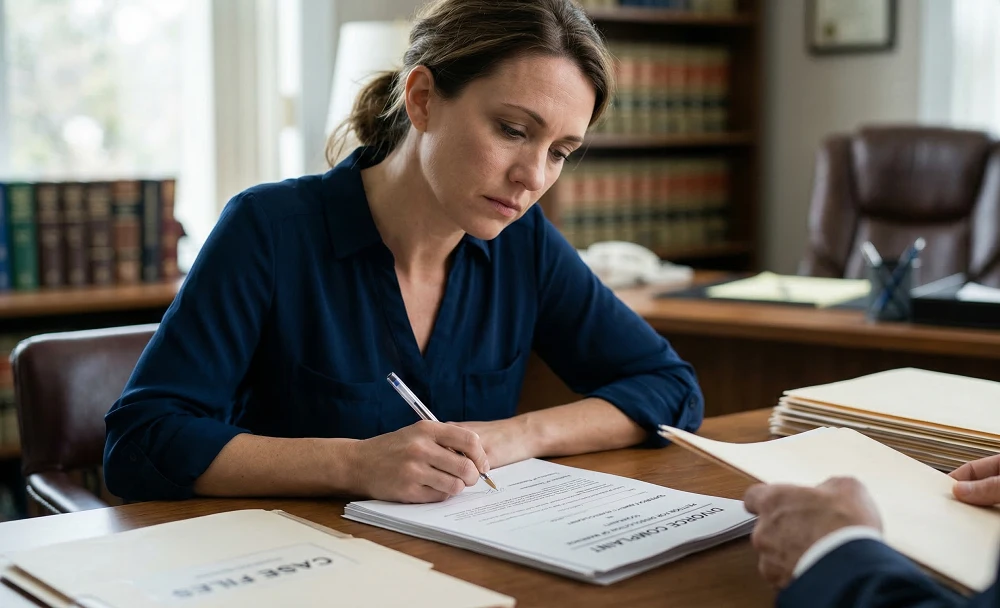
Both legal separation and divorce begin when one spouse files a complaint with the court. After filing, the other spouse must receive notice through approved service methods such as certified mail or personal delivery. From there, the court may schedule hearings, issue temporary orders, or encourage settlement discussions.
In some cases, spouses reach agreements early, allowing the process to move more smoothly. In others, the judge may need to resolve disputes after reviewing evidence and testimony.
When Couples Choose Legal Separation Instead of Divorce
Legal separation may be the right choice when spouses want legal protection but prefer to remain married. Reasons vary from family to family. Some individuals have religious or personal reasons for avoiding divorce, while others need time to decide what the future holds.
Ohio’s Domestic Relations Resource Guide confirms that legal separation can be granted based on no-fault grounds, such as incompatibility or living separate and apart, along with traditional fault grounds recognized by statute.
Legal separation can also provide structure during uncertain periods by defining financial responsibilities, parenting arrangements, and property use. For many families, it offers a way to create stability without making a permanent decision.
Get Legal Support with Your Separation or Divorce
Deciding between legal separation and divorce in Ohio involves more than paperwork. It affects parenting plans, financial security, and long-term goals. The right legal approach helps you protect what matters most while moving through the process with clarity and confidence.
At Dailey Law Offices, our empathetic Columbus family lawyer helps families deal with family law matters. Whether you are considering legal separation or preparing for divorce, our elite team provides guidance focused on protecting your rights and helping you move forward with confidence. Contact us for a free consultation.


Heading
Don’t face life’s challenges alone. Schedule your free consultation with Dailey Law Offices today and let us provide the professional guidance you need for divorce, custody, estate planning, or probate.